
Old Appliances That Won't Leave on Their Own
Appliance Removal in Maple Grove for Kitchens, Laundry Rooms, and Properties with Outdated Major Equipment
Refrigerators stop cooling efficiently but remain too heavy to move without equipment, washers leak onto laundry room floors but require disconnection before removal, and ovens occupy kitchen space during remodels while waiting for disposal arrangements. These situations are common across Maple Grove and the surrounding Twin Cities metro, where suburban kitchen and laundry upgrades leave homeowners managing appliances that no longer function but can't simply be set at the curb. Junk Removal America removes old refrigerators, washers, dryers, ovens, dishwashers, and other major appliances from your home, handling disconnection steps noted in the scope and navigating doorways, stairs, and tight corners that make DIY removal impractical.
Appliance removal becomes necessary during kitchen or laundry renovations, after appliance failure when repair costs exceed replacement value, or during estate and foreclosure cleanouts where multiple units require simultaneous removal. The crew disconnects water supply lines for washers and dishwashers, notes gas line shutoffs for ranges and dryers in the project scope, and removes units from basements, second-floor laundry rooms, or built-in kitchen alcoves where original installation assumed professional removal.
Request an estimate that includes disconnection requirements and access considerations specific to your appliance locations.
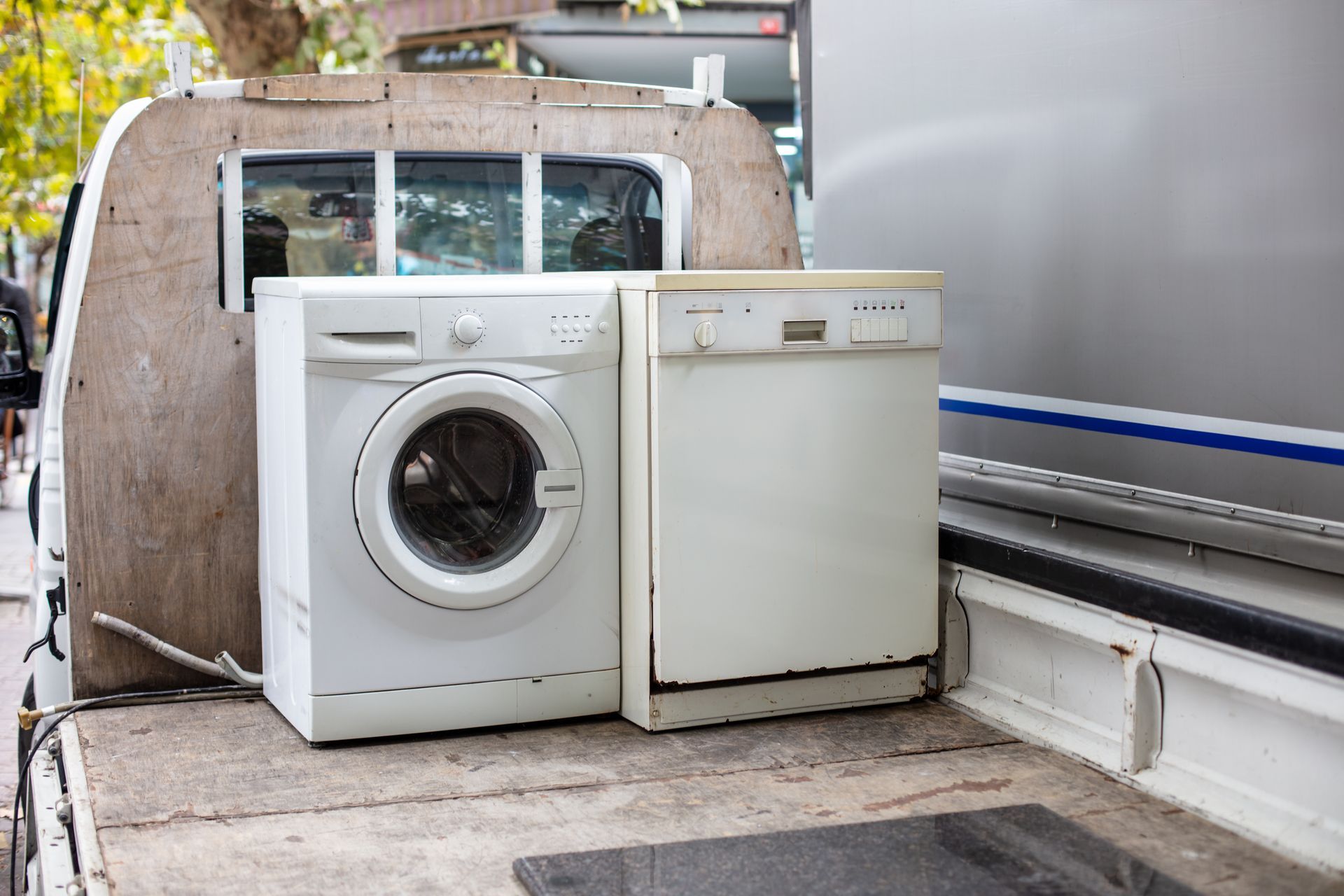
How Appliance Disconnection and Removal Actually Works
Before removal begins, the crew reviews which appliances need disconnection and whether water, gas, or electrical lines require shutoff coordination. Water supply lines for washers and dishwashers are capped after disconnection to prevent leaks, and gas line work is noted so you can arrange shutoff through your utility provider or plumber if the crew's scope does not include gas disconnection. This planning step prevents damage to your home's utility systems and ensures safe appliance extraction.
After removal, your kitchen or laundry room floor space opens up for new appliance installation, remodeling work proceeds without old units blocking access, and basements or garages no longer store broken equipment waiting for disposal. Doorways that barely accommodated original appliance delivery are navigated in reverse, and stairs are protected during the process so finishes remain intact. Refrigerators are routed to recycling facilities that handle refrigerant removal per environmental regulations, while metal components from washers, dryers, and ovens enter scrap recycling streams rather than landfills.
The service includes removal from your property and transport to the appropriate disposal or recycling facility, but does not include new appliance delivery, installation, or utility line modifications—your contractor or appliance retailer handles those steps separately once the old units are cleared.
Common Appliance Removal Questions
Appliance removal in the Twin Cities area involves coordination around access challenges and disposal requirements, and understanding these details helps you prepare.
What disconnection steps does the crew handle during appliance removal?
Water supply lines for washers and dishwashers are disconnected and capped, while gas line shutoffs and electrical disconnections are coordinated based on what the project scope includes—you confirm these details during scheduling so the right preparation happens before removal.
How do crews remove appliances from basements or second-floor laundry rooms?
Appliances are tilted, padded, and guided through doorways and up or down stairs using furniture moving techniques, with floor and wall protection in place to prevent damage to paint, trim, and flooring during extraction.
When should I schedule appliance removal during a kitchen remodel?
Most homeowners schedule removal after new appliances are delivered but before installation begins, so old units don't block contractor access and new equipment doesn't sit in storage while waiting for the old units to leave.
What happens to old refrigerators and freezers after removal?
Units are transported to recycling facilities that extract refrigerants according to EPA regulations, then separate metal, plastic, and insulation components for material recovery rather than landfill disposal.
How much space do I need to clear before appliance removal?
The crew needs a clear path from the appliance location to the exit door, so moving small furniture, rugs, or boxes out of hallways and doorways prevents delays and protects your belongings during the removal process.
Junk Removal America manages the disconnection coordination, heavy lifting, and disposal routing so your remodel or upgrade moves forward without old appliances complicating the timeline. Call to discuss your appliance removal needs and confirm access details for your property.